Online
Please share your contact details to begin your consultation with our AI assistant.
By starting a chat, you agree to our privacy policy and data processing terms.
506 articles covering UK law — immigration, corporate, property, technology, employment and more. Updated daily from Google News.
Showing 151–180 of 506 articles
Page 6 of 17

A major new review has been launched into the role of artificial intelligence across the finance sector launched by the UK’s financial watchdog.

In conjunction with our US and APAC Regulatory Centres, this global foreword introduces “The Regulatory Remix”, set to shape financial regulation in 2026.
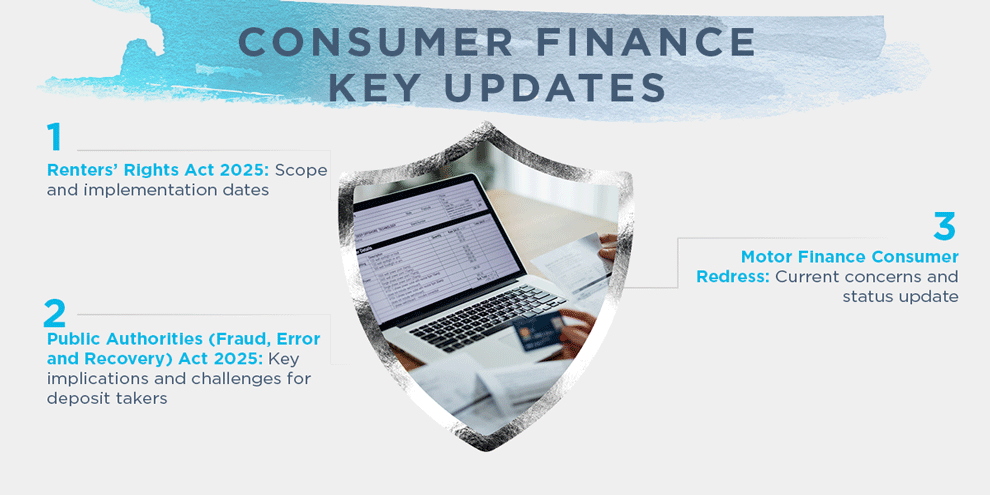
Our latest Consumer Finance regulation update highlights key developments in motor finance and retail insurance.
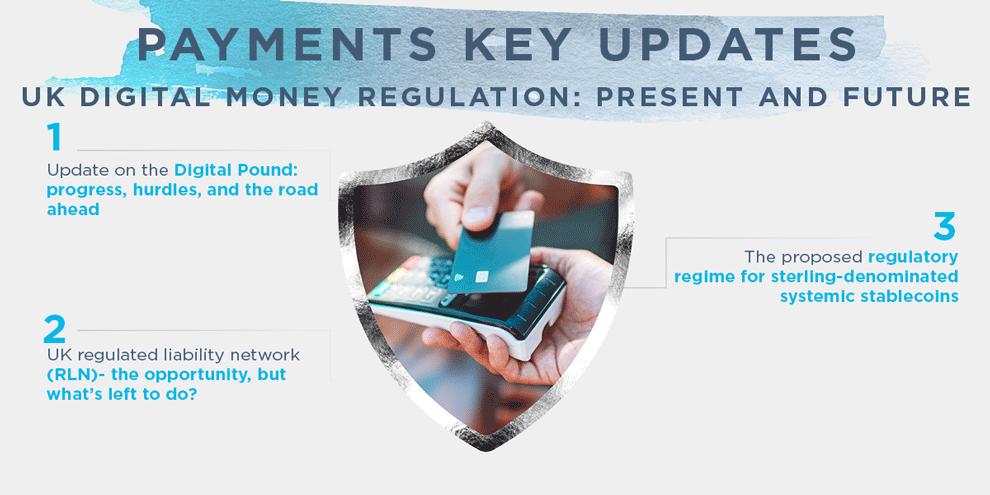
The UK is progressing digital money regulation through several workstreams led by the Government, industry, and regulators. HM Treasury and the Bank of England are considering a digital pound to complement cash and deposits, aiming to boost the digital economy.

ESG and sustainable finance matters will be the subject of renewed focus this year for UK financial institutions. This focus will be driven in part by t...

We use necessary cookies to make our site work (for example, to manage your session). We’d also like to use some non-essential cookies (including third-party cookies) to help us improve the site. By clicking ‘Accept recommended settings’ on this bann...

Proposals on the way the UK’s financial watchdog plans to regulate businesses conducting crypto asset activities will mean significant changes for organisations which have previously not come under their remit, according to an expert.

The UK’s financial services sector is facing falling investment, posing a risk to this vital part of the country’s economy. In response, regulators must balance consumer protection with growth, by ensuring proportionate oversight, clear rules and targeted support.

Our annual report and podcast explore crucial developments across a broad range of areas, including the Leeds Reforms, ESG, and AI. In the wake of a

The UK government’s plans to reform the role of the Financial Ombudsman Service (FOS) will require careful implementation and pose potential transitional risks, an expert has warned.

A detailed look at the UK and EU financial markets in 2026, covering major regulatory reforms across capital markets, market structure, derivatives and digital assets.

UK financial services regulation balances growth and stability. Firms must focus on financial crime, operational resilience, AI and volatility. Learn more.

A cross-party group of UK parliamentarians has called for a sweeping overhaul of the UK's financial regulation.

Some rules are there for a very good reason.

Sarah Hall explains why despite efforts to align more closely with the EU in other sectors as part of the government's UK-EU reset, the UK's financial services sector will not see closer alignment with EU rules.

2025 has brought the financially regulated community many gifts in the form of promised reforms. Changes in policy, regulatory strategies and priorities, newly regulated activities that will bring more firms within the regulatory perimeter, overhaul of more rules assimilated from the EU after

The UK government has fined an Irish subsidiary of Apple £390,000 after it breached sanctions by making payments to a Russian app developer linked to ...

The All-Party Parliamentary Group (APPG) on Investment Fraud and Fairer Financial Services has called for parliament to “reclaim its role in financial regulation”. In a report published today (16 March) the group said the UK's system of financial conduct regulation is in urgent need of fundamental structural reform and pressed Parliament to undertake a review of the UK's financial conduct regulatory architecture. Across 21,625 individual ratings of regulatory performance in the report, 83% said they ‘strongly agree” with statements that were critical of the Financial Conduct Authority’s performance. The APPG noted that the government is currently pursuing policies aimed at reducing regulatory burdens to stimulate economic growth, but argued that weakening consumer protections risks: increasing financial scandals; damaging the reputation of the UK's financial sector; reducing public participation in financial markets; and deepening the trust deficit between consumers and financial institutions. The cohort is calling for a Royal Commission into UK financial conduct regulation to undertake a comprehensive review of the regulatory architecture, define clearly what fairness in financial services should mean, examine how responsibility should be shared between Parliament, regulators, ombudsmen and the courts, and consider reforms to ensure regulators are properly accountable to democratic institutions. John McDonnell MP, chair, said: This report brings together one of the most comprehensive bodies of evidence ever assembled on the failures of financial conduct regulation in the United Kingdom. “The evidence presented here makes the case for a Royal Commission, or something similar, that can undertake a genuine root-and-branch review of financial regulation. “Parliament must reclaim its role in defining what fairness means in financial services and ensure that the institutions responsible for protecting consumers are not just capable of delivering it, but are also motivated to do so in an unconflicted manner.”

The Financial Ombudsman Service (FOS) will undergo the most significant package of reforms since its inception.

Banks, insurers and investment firms, as well as providers of financial market infrastructure (FMI), have been given a year to adapt to new UK reporting requirements.
The All-Party Parliamentary Group (APPG) on Investment Fraud and Fairer Financial Services has published a 250 page report arguing that Parliament must "reclaim its role" in financial regulation.

New UK rules will bring crypto firms under full financial regulation, demanding stronger governance, resilience and consumer protection standards

Close Brothers, Barclays, Lloyds and Santander, among others, are affected by the motor finance mis-selling affair. The UK regulator has set out its redress figures, cutting the total amount from where it was in an earlier part of its consultation....

Japanese March 19, 2026 Financial Services Agency...
/Passle/MediaLibrary/Images/2026-01-12-12-38-34-970-6964eb4aab784af100f1c1f3.png)
This week: Companies House publishes an outline timetable for implementing reforms to UK company lawThe court substitutes an alternative...
Companies House is aiming to introduce the first set of measures under the Economic Crime and Corporate Transparency Act on 4 March 2024.
This guidance sets out the common approach of the Crown Prosecution Service and the Serious Fraud Office to the prosecution of corporate offending in England and Wales. It should be read in conjunction with, and is subordinate to, the Code for Crown ...

PPE Medpro is the company which provided £200m of PPE to the Government in dubious circumstances, of which £122m was faulty. Reports suggest it made £65m profit…
The voluntary period for identity verification is open for business. More than 6 million individuals will need to comply in the 12 months after identity verification becomes a legal requirement later this year. This phased approach reduces the burden on companies.

Richard Murphy on developing a fairer and sustainable economy
Our articles provide general guidance. For advice specific to your situation, contact our team for a consultation.
Request a Callback